Landed House Design Singapore: When to Follow Trends and When to Avoid Them
- Oliver Bennett
- 7 days ago
- 4 min read


Designing a landed property in Singapore is a big investment, and the choices you make will shape not just how your home looks, but how it feels and functions for years. With so many styles circulating online, from ultra-modern minimalism to bold luxury interiors, it’s easy to get caught up in trends.
But here’s the truth: not every trend is worth following, especially in a landed house design Singapore context where space, climate, and long-term value matter more than aesthetics alone. The real challenge in interior design in Singapore is knowing when a trend improves your home and when it quietly becomes an expensive regret.
Understanding Trends in Landed Home Design
Trends in home design usually come from global inspiration, Pinterest, Instagram, luxury showrooms, and architectural showcases. In Singapore, these trends are often adapted for:
Tropical climate
Compact urban layouts (even for landed homes)
High humidity conditions
Multi-generational living needs
Some trends are practical evolutions of better living. Others are purely visual and don’t hold up over time.
When You Should Follow Design Trends
1. When the trend improves functionality
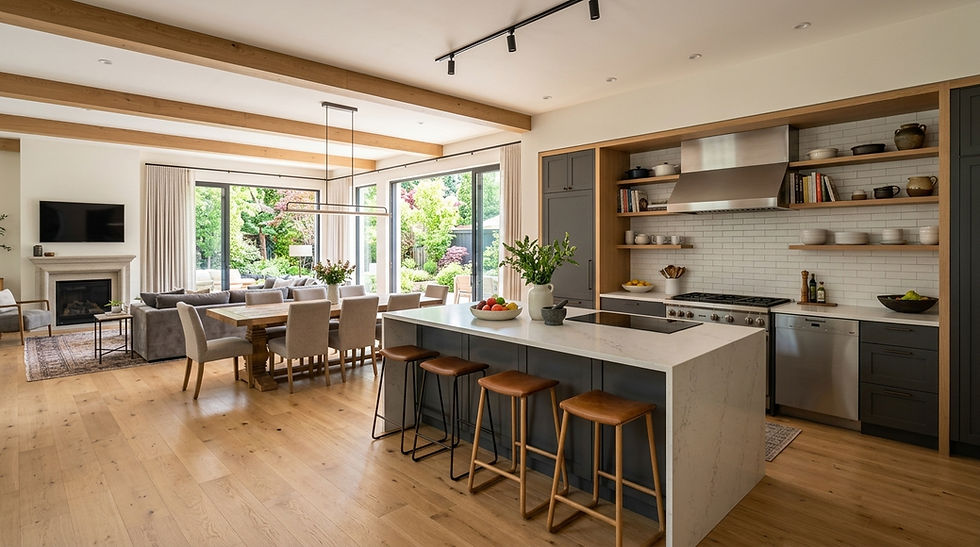
Some modern trends actually solve real problems. For example, open-concept layouts, built-in storage, and smart home systems are not just aesthetic choices; they improve daily living.
In many landed living room renovation projects in Singapore, open layouts help:
Increase natural light
Improve airflow
Create more usable space
These trends are worth adopting because they enhance comfort and practicality, not just appearance.
2. When the trend is climate-appropriate
Singapore’s humid weather plays a big role in design decisions. Trends that support ventilation, cooling, and low-maintenance materials are smart choices.
Examples include:
Natural ventilation designs
Moisture-resistant flooring
Light-reflective interior palettes
These align well with the long-term renovation in Singapore.
3. When the trend is timeless at its core
Some trends are just modern versions of classic design principles. Minimalist interiors, neutral tones, and natural textures are examples of styles that evolve but never truly disappear.
These are safe to follow because they age well and support long-term property value.
4. When you plan to stay long-term
If this is your forever home, you have more flexibility to experiment with trends. You can prioritize comfort and lifestyle over resale concerns.
For example, integrating bold feature walls or custom lighting can work well if you personally enjoy them.

When You Should Avoid Design Trends
1. When the trend is purely aesthetic
Some design trends look impressive on social media but fail in real life.
Examples include:
Overly dark interiors in small spaces
Excessive decorative features
Complicated ceiling designs
Fragile materials that require high maintenance
These may look luxurious but often reduce practicality in daily living.
2. When it reduces long-term resale value
Not all buyers share the same taste. Extremely bold or niche designs can make it harder to sell your property later.
This is especially important for landed house renovation Singapore where property value is significant. Neutral, adaptable designs usually perform better in the resale market.
3. When it doesn’t suit your space size
A common mistake in landed interior design in Singapore is copying trends from large overseas homes.
For example:
Oversized furniture in narrow spaces
Heavy textures in low-light rooms
Complex layouts in compact areas
Design should always match proportion and scale.
4. When maintenance is too high
Some trendy materials look beautiful but are difficult to maintain in Singapore’s climate.
Avoid trends that involve:
High-maintenance stone surfaces
Difficult-to-clean textured walls
Delicate finishes in high-traffic areas
A beautiful home that is hard to maintain quickly becomes frustrating.
5. When it increases the renovation cost unnecessarily
Some trends significantly inflate your renovation budget in Singapore without adding real functional value.
Examples:
Imported luxury materials without durability benefits
Complex carpentry with no storage advantage
Decorative features that require custom repairs
Always ask: Does this improve my daily life or just the look?
Smart Way to Balance Trends and Timeless Design
The best approach is not to reject trends completely, but to filter them.
A good rule is:
Use trends in easily changeable elements (paint, décor, lighting)
Keep structure and layout timeless
Invest in functionality first
Style second
For example:
Trendy cushions → OK
Trendy flooring you can’t replace easily → risky
This balance is key in successful modern landed house design in Singapore.
Practical Design Strategy for Landed Homes
A strong landed home design usually follows this structure:
Permanent elements (layout, flooring, carpentry): timeless
Medium-term elements (lighting, feature walls): semi-trendy
Temporary elements (furniture, décor): trend-friendly
This layered approach keeps your home flexible without risking long-term regret.
Conclusion
Landed house design in Singapore works best when trends are used as inspiration, not rules. Some trends improve comfort, space efficiency, and lifestyle, while others only look good temporarily but become impractical over time. The real key is balance, keeping your core design timeless while allowing flexible, easy-to-change elements to reflect current styles. A well-planned home should feel functional today and still look relevant years later, especially in long-term investments like landed house renovation Singapore and interior design in Singapore.
FAQs
Q1: Should I follow social media design trends for my landed home?
Only as inspiration. Always adjust them to your space, budget, and long-term use.
Q2: What is the safest design style for landed homes?
Timeless styles like modern minimalist or contemporary neutral designs are safest.
Q3: Can I mix multiple design trends in one house?
Yes, but only if the base design is consistent. Too many styles can look messy.
Q4: Do trends affect property value in Singapore?
Yes. Overly bold or niche designs may reduce resale appeal, while neutral designs maintain value.
Q5: How often should I update my home design?
Minor updates every few years are enough. Major renovations are usually not needed if the base design is timeless.

Comments